


Beyond the Trash Can: Why a Food Waste Disposer Is the Ultimate Kitchen Upgrade Content:
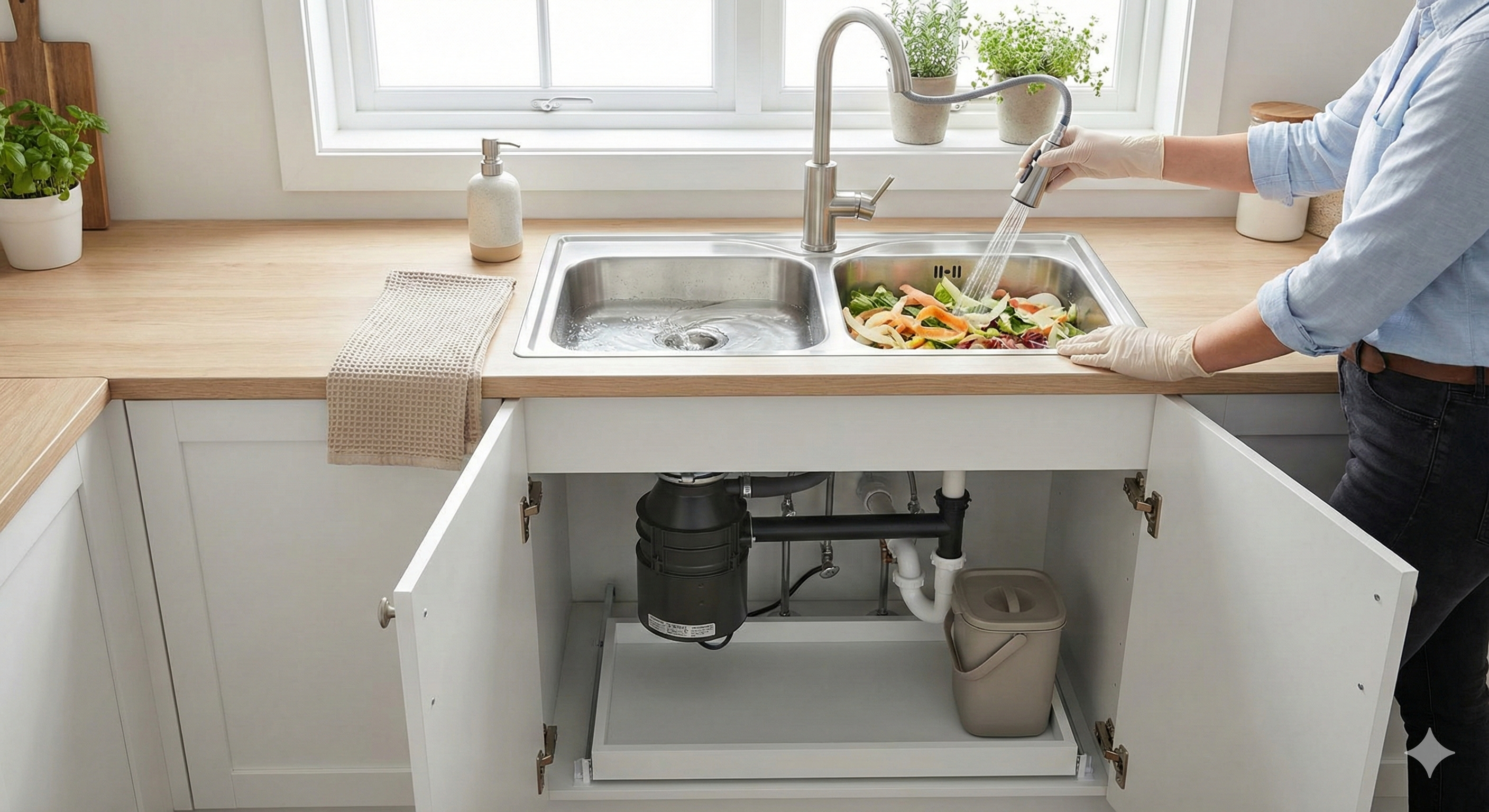
We live in an age of smart homes. We have refrigerators that can tell us when we are out of milk, ovens that we can preheat from our phones, and faucets that turn on with a wave of a hand. Yet, despite all this technology, many households still manage their kitchen waste the same way people did in the 1950s: by throwing it into a bin.
This outdated method is the root cause of most kitchen hygiene issues. Rotting organic matter creates odors, attracts pests, and requires constant trips to the outdoor garbage cans. The solution to this problem isn't a better trash bag; it is a high-performance Food waste disposer.
Often referred to casually as a garbage disposal, the technical term "food waste disposer" more accurately describes its function. It doesn't just dispose of garbage; it actively processes biological waste, transforming your kitchen sink from a passive basin into a sanitation powerhouse.
This guide explores why this appliance is essential for the modern home, how it benefits the environment, and how to choose the right model for your culinary needs.
The Sanitation Revolution
The primary argument for installing a food waste disposer is hygiene.
When you peel potatoes, trim chicken fat, or scrape dinner plates into a trash can, you are essentially creating a breeding ground for bacteria in your kitchen. Even with a lid, the decomposition process begins immediately.
Within hours, that waste releases methane and sulfur compounds—the source of that "kitchen trash smell."
A disposer eliminates this biology experiment entirely.
By grinding food scraps into a liquid slurry and flushing them into the sewage system instantly, you remove the food source for ants, fruit flies, and cockroaches. Your kitchen smells fresher because the waste is gone, not just hidden.
Environmental Impact: The Green Choice
There is a common misconception that putting food down the drain is bad for the environment. The opposite is often true.
When food waste ends up in a landfill, it is buried under tons of other trash. Lacking oxygen, it undergoes anaerobic decomposition, releasing methane—a greenhouse gas that is 25 times more potent than carbon dioxide at trapping heat in the atmosphere.
A food waste disposer diverts this organic matter from the landfill.
Instead, it sends the waste to a wastewater treatment plant. Modern treatment facilities are designed to handle organic solids. Many of them can capture the methane released during processing and use it to generate renewable energy to power the plant. In some cases, the solid remnants are turned into high-quality fertilizer for agriculture.
By using your sink’s disposer, you are effectively recycling your food scraps into energy or soil nutrients, rather than contributing to landfill mass.
Anatomy of a Disposer: How It Works
Understanding your appliance is the key to making it last.
A lot of homeowners are afraid to put their hands near the drain because they imagine a set of spinning knives like a blender. This is a myth.
A food waste disposer does not have blades.
Instead, it uses a spinning metal plate called a turntable. On this turntable are two swiveling metal lugs called "impellers." When you turn the unit on, the turntable spins at roughly 1,700 to 2,800 RPM.
Centrifugal force pushes the food scraps against the outer wall of the chamber, which is lined with a stationary "Grind Ring." This ring acts like a cheese grater. The impellers force the food against the ring, shredding it into tiny particles (less than 2mm) that can easily wash down the pipe.
Because there are no sharp knives, the unit is much safer and more durable than people realize. It relies on torque and speed, not sharpness.
Selecting the Right Horsepower
If you are in the market for a new food waste disposer, the most critical specification is Horsepower (HP).
Builders often install the cheapest units available to save money, which is why many new homeowners have bad experiences with clogging.
Here is a breakdown of what you need:
1/3 HP (The Economy Model) Avoid these if possible. They are constructed with cheaper materials and lack the torque to grind anything harder than soft vegetable leaves. They jam frequently and rust quickly.
1/2 HP (The Standard) This is the minimum acceptable standard for a typical home. It can handle fruit skins, soft veggie scraps, and cereal. However, it will struggle with tough fibers or small bones.
3/4 HP (The Sweet Spot) For a family that cooks daily, this is the ideal size. A 3/4 HP motor has enough torque to grind chicken bones, corn cobs, and fibrous stalks without jamming. It also tends to run quieter because the components are heavier and more balanced.
1 HP (The Pro Series) These are semi-commercial units designed for large families or serious cooks. They are virtually impossible to jam and often feature multi-stage grinding chambers that can liquefy almost anything.
The Rules of Operation
To keep your food waste disposer running for a decade or more, you must follow three golden rules of maintenance.
Rule 1: Cold Water Only This is the most common mistake. People think hot water "melts" the grease and cleans the pipes. While hot water does melt grease, that is actually the problem. Liquid grease passes through the disposer easily, but as soon as it hits the cold pipes further down your plumbing line, it solidifies. This creates "fatbergs" that clog your main sewer line. Always use cold water. It keeps the fat solid, allowing the disposer to chop it into tiny granules that float harmlessly down the pipe.
Rule 2: Continuous Flow Don't turn the water off the second the grinding noise stops. Let the water run for at least 15 to 20 seconds after the food is gone. This ensures that the slurry is pushed all the way through the P-trap and into the main sewer line, preventing sediment buildup in your home's plumbing.
Rule 3: Hard vs. Fibrous Hard foods are actually good for the machine. Grinding small chicken bones, eggshells, or fruit pits creates a scouring action that cleans the inside of the grind chamber. Fibrous foods are the enemy. Celery, corn husks, and onion skins have long, stringy fibers. These can tangle around the impeller shaft, causing the motor to stall. Throw these in the compost bin instead.
Troubleshooting Common Issues
Even the best machines can encounter problems. Here is how to handle them without calling a plumber.
The Jam (Humming Sound) If the unit hums but won't spin, a piece of debris is stuck between the turntable and the grind ring.
-
The Fix: Turn off the power. Use the service wrench (an Allen key) in the hole at the bottom of the unit to manually crank the motor back and forth. This breaks the jam.
The Odor If your sink starts to smell, it is likely due to food particles trapped under the rubber splash guard (the black rubber flaps in the drain).
-
The Fix: Scrub the underside of the splash guard with a soapy brush. Then, grind a few lemon wedges or ice cubes to freshen the chamber.
Conclusion
The kitchen is an ecosystem. From the smart coffee maker that starts your morning to the air fryer that cooks your dinner, every appliance plays a role.
But the food waste disposer is the foundation that keeps that ecosystem clean.
It is an investment in your home’s hygiene and a contribution to a greener planet. By choosing the right model and treating it with care, you can ensure that your kitchen remains the clean, efficient heart of your home for years to come.
 Portuguese (Brazil)
 English
 Arabic
 French
 Spanish
 Portuguese
 Deutsch
 Turkish
 Dutch
Dutch
 Italiano
 Russian
 Romaian
 Greek
Greek
