


How Dihexa Works: A Scientific Perspective on Synaptogenesis
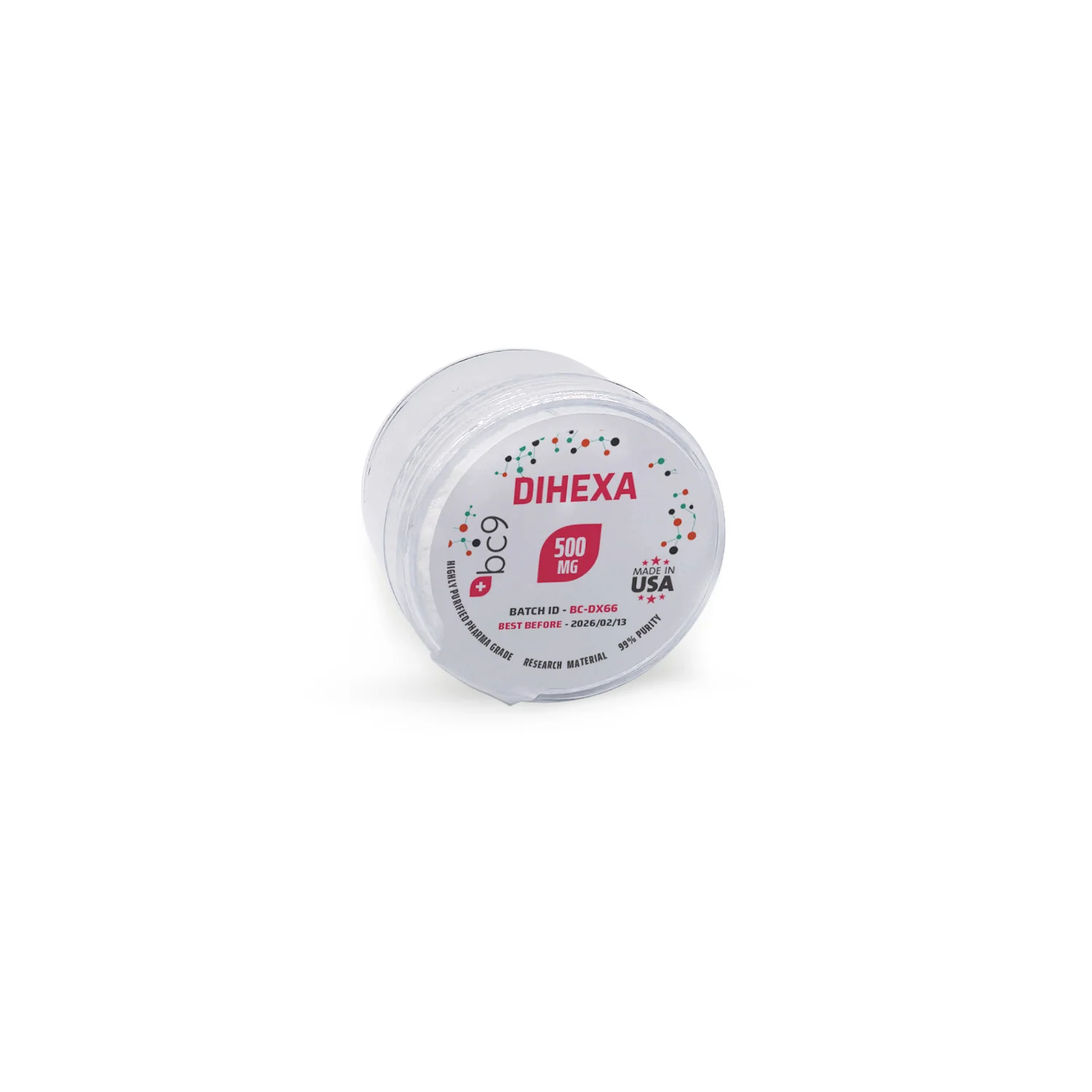
Dihexa is a synthetic, small-molecule compound engineered to influence synaptic connectivity and neuronal communication. Structurally derived from angiotensin IV analog research, Dihexa (N-hexanoic-Tyr-Ile-(6) aminohexanoic amide) was designed to enhance central nervous system penetration and amplify neurotrophic signaling activity. Unlike large peptide growth factors that struggle to cross the blood–brain barrier, Dihexa demonstrates strong lipophilicity and oral bioavailability, allowing it to exert biological activity within neural tissue.
The defining characteristic of Dihexa is its high-affinity interaction with hepatocyte growth factor (HGF) and the downstream activation of the c-Met receptor tyrosine kinase pathway—one of the most critical cascades involved in synaptogenesis, neuronal survival, and structural plasticity.
Molecular Mechanism of Dihexa: HGF/c-Met Activation
Binding Affinity and Signal Amplification
Dihexa functions as a potentiator of hepatocyte growth factor signaling. HGF is a pleiotropic growth factor that binds to the c-Met receptor, triggering intracellular phosphorylation cascades. Dihexa enhances HGF activity by stabilizing its interaction with c-Met, effectively increasing signal strength without directly replacing endogenous growth factor.
Upon activation, c-Met autophosphorylates specific tyrosine residues, recruiting adaptor proteins such as Gab1, Grb2, and PI3K. This initiates several downstream signaling pathways critical for synaptic formation:
- PI3K/Akt pathway – Promotes neuronal survival and dendritic growth
- MAPK/ERK pathway – Drives synaptic plasticity and structural remodeling
- STAT pathway – Supports gene transcription related to neural repair
This signaling convergence creates an intracellular environment conducive to new synapse formation and stabilization.
Synaptogenesis and Structural Plasticity
Dendritic Spine Formation
Synaptogenesis requires cytoskeletal remodeling, receptor trafficking, and protein synthesis. Dihexa-enhanced HGF signaling increases actin polymerization within dendritic spines, leading to:
- Increased spine density
- Enhanced spine maturation
- Improved synaptic anchoring
Dendritic spines serve as postsynaptic platforms for excitatory neurotransmission. Higher spine density correlates with improved learning and memory performance in experimental models.
Long-Term Potentiation Enhancement
Long-term potentiation (LTP) represents the electrophysiological basis of memory consolidation. Dihexa influences LTP by modulating NMDA receptor function and promoting synaptic protein synthesis. Enhanced HGF signaling increases the availability of synaptic scaffolding proteins such as PSD-95 and synapsin, strengthening excitatory synaptic transmission.
Blood–Brain Barrier Penetration and Pharmacokinetics
One of the limitations of neurotrophic proteins like BDNF or HGF is poor permeability across the blood–brain barrier (BBB). Dihexa’s small molecular structure and lipophilic modifications allow it to cross the BBB efficiently after oral administration.
Key pharmacological properties include:
- High central nervous system penetration
- Sustained receptor engagement
- Stability in systemic circulation
This pharmacokinetic profile differentiates Dihexa from peptide-based neurotrophic agents, which typically require invasive delivery methods.
Comparative Analysis: Dihexa vs. Traditional Neurotrophic Factors
|
Feature |
Dihexa |
BDNF |
HGF |
|
BBB Penetration |
High |
Low |
Low |
|
Oral Bioavailability |
Present |
Absent |
Absent |
|
Synaptogenic Potency |
High |
Moderate |
High |
|
Molecular Size |
Small molecule |
Large protein |
Large protein |
Dihexa effectively functions as a signal amplifier rather than a replacement growth factor, making it mechanistically distinct from direct neurotrophin supplementation strategies.
Neuroplasticity and Network Remodeling
Neuroplasticity involves both structural and functional adaptation of neuronal networks. Dihexa’s enhancement of HGF signaling influences:
- Axonal branching
- Synaptic density
- Neurotransmitter receptor clustering
- Glutamatergic signaling balance
Through sustained receptor activation, Dihexa supports the remodeling of damaged or underperforming neural circuits. This remodeling is not limited to a single brain region but extends across hippocampal and cortical networks involved in executive function and memory encoding.
Synaptic Protein Expression and Translational Control
Activation of PI3K/Akt and ERK pathways increases mTOR signaling, a master regulator of protein synthesis. Elevated mTOR activity results in:
- Increased synthesis of synaptic scaffolding proteins
- Enhanced receptor trafficking
- Stabilization of newly formed synapses
This coordinated increase in protein translation ensures that newly formed connections are functionally integrated rather than transient.
Neuroinflammation Modulation
HGF signaling possesses anti-inflammatory properties. By activating c-Met receptors on microglia and astrocytes, Dihexa may reduce pro-inflammatory cytokine production while enhancing neuroprotective responses.
Reduced neuroinflammation contributes indirectly to improved synaptic survival and maintenance, especially in environments characterized by oxidative stress or excitotoxic damage.
Structural Basis of Potency
Dihexa’s hexanoic modifications increase lipophilicity and receptor-binding efficiency. Its molecular configuration allows high-affinity engagement without rapid enzymatic degradation. This structural optimization explains the compound’s strong biological activity at comparatively low concentrations.
Integrated Model of Dihexa-Induced Synaptogenesis
Dihexa enhances synaptogenesis through a coordinated sequence:
- Stabilization of HGF
- Amplified c-Met receptor phosphorylation
- Activation of PI3K/Akt and ERK cascades
- Upregulation of synaptic protein synthesis
- Dendritic spine growth and maturation
- Strengthened long-term potentiation
This integrated signaling network produces structural and functional enhancements within neuronal circuits.
Conclusion: The Scientific Position of Dihexa in Neuroregenerative Research
Dihexa represents a targeted approach to synaptogenic enhancement through amplification of endogenous HGF/c-Met signaling. Its ability to cross the blood–brain barrier, stimulate intracellular growth pathways, and promote structural plasticity positions it as a significant molecule in the study of synaptic regeneration and cognitive signaling research.
By directly influencing the molecular machinery responsible for synapse formation and maintenance, Dihexa operates at the foundational level of neural connectivity where memory, learning, and network adaptation originate.
 Portuguese
 English
 Arabic
 French
 Spanish
 Deutsch
 Turkish
 Dutch
Dutch
 Italiano
 Russian
 Romaian
 Portuguese (Brazil)
 Greek
Greek
