


Coloring pages between sessions: Keep physical work ready to return
Coloring pages between sessions: Keep physical work ready to return
Putting a partly colored sheet aside is a physical task, different from saving its source reference. You need to recognize the actual piece, know where it can rest, and retrieve it without disturbing other work. Even when you use coloring pages for free, the practical question is the same after printing: how do you keep that specific sheet ready for a later return? A temporary arrangement should suit your real space. An optional next-area cue can help, but storing the sheet does not promise completion. A brief retrieval check simply restores access to a choice you can reconsider later.
1. Identify the actual sheet you want to keep available
Distinguish the physical work from unused versions and source information. An arrangement is useful when you can find the sheet you meant, rather than another copy of the same design or its source page.
1.1 Separate partly colored work from unused choices
Imagine a partly colored garden beside an unused version and a source reference. The reference may help later, but it does not show where the active physical piece rests. Keep the used sheet distinguishable through its visible state and an agreed place. An unused version may share the same outlines while lacking the areas already colored. Anyone helping should understand which sheet is current.
A simple distinction often works best:
- Keep the partly colored sheet in one agreed temporary place.
- Keep unused copies together but separate from active work.
- Retain source information only when it may be needed later.
- Avoid adding labels directly to the artwork unless necessary.
1.2 Keep any next-area cue optional and specific
If a reminder would help you return, choose one recognizable region, such as the large leaf beside the pot. Keep it precise enough to find on the actual sheet and separate from the design if recorded. The cue does not need to reconstruct previous decisions. When you return, that leaf may no longer be what you want to color. Storing the work preserves access rather than fixing a future plan.
Imagine that a child stops after coloring the flowers around a garden path. A parent places the sheet on a side shelf and notes, “the big leaf near the pot.” Two days later, the child chooses the sky instead. Nothing has gone wrong. The cue suggested a starting point, while the stored sheet still allowed a fresh choice.

A small tidy stack of unused coloring sheets waiting
2. Choose a temporary place that serves the next use
Look at the available space and its ordinary uses before choosing where the sheet will rest. A temporary arrangement should support the work and retrieval without requiring a new storage system.
2.1 Keep the sheet supported and away from ordinary disturbance
Choose a place that supports the whole sheet and is unlikely to be disturbed. A surface needed for meals or another person's active task may not work. Check the actual space rather than assuming a neat-looking corner will remain free. Use an arrangement you already have when it works, and ask before occupying a shared area.
This matters whether the page came from a book, a loose printable, or a set of coloring pages pdf files printed at home. Once the page is physical, the storage decision depends on the real sheet in front of you, not the digital format it came from. The chosen place should keep the paper supported and easy to reach.
This is a practical temporary choice, not a claim about material safety or long-term preservation. If the place creates another problem, choose a different agreed location.
2.2 Make retrieval possible without moving someone else's work
Before placing the sheet, consider how you will lift it again. A convenient stack may require disturbing another person's partly completed picture later. Avoid treating their active work as a layer you can move whenever you want access. Choose another place or agree on handling first.
Check the route to the sheet as well as its resting position. If ordinary use will cover it with books or craft supplies, the convenience may be temporary. A workable arrangement keeps the intended piece accessible without shifting inconvenience to somebody else.
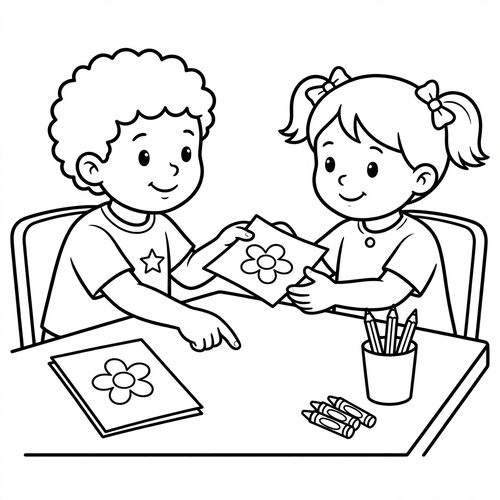
Two children sharing a coloring page at a shared table
3. Make handling boundaries clear in a shared space
A visible sheet is not automatically available to move, finish, show, or discard. This matters when several people use the same room or share free coloring pages and printed activities. Clarify the handling agreement so an attempt to help does not change what the owner wanted to preserve.
3.1 Ask before moving another person's sheet
If you want to relocate someone else's partly colored picture, name the proposed place and ask first. They may prefer another location or want to take it away. What looks helpful can make retrieval harder. Keep the request about that sheet and space instead of turning it into an unrequested reorganization.
Suppose two siblings are coloring at the same table. One leaves a half-finished animal page near the edge. The other needs more room and considers sliding it under blank sheets. A quick question avoids confusion: “Can I put this on the shelf beside your pencils?” That agreement protects the picture without changing who decides what happens to it.
For More Information:
Printable Coloring Pages PDF That Make Screen Free Time Feel Special
Coloring Pages That Turn Quiet Moments Into Bright Adventures
3.2 Distinguish putting aside from offering work to continue
Putting a picture aside means leaving it available under a handling arrangement. It does not invite another person to finish blank regions, add details, display the result, or discard it. Agree who may move the sheet if the temporary surface is needed, and where it should go. Permission to relocate the paper is not permission to continue it.
In a shared space, a useful agreement can be simple:
- Ask before moving another person's active sheet.
- Agree on one backup place if the main surface is needed.
- Do not color, display, or discard the work without permission.
- Keep retrieval easy enough that the owner can find it again.
4. Check that returning is genuinely straightforward
After placement, check that the intended physical sheet can be recognized and retrieved through the arrangement you chose.
4.1 Locate the sheet you meant to keep
Find the partly colored sheet and check that it can be lifted without disturbing other active work. If unused choices conceal it, separate the current piece through an agreed physical arrangement. The distinction should remain understandable to someone who may need to move it later.
Stop when the intended sheet is recognizable and accessible; the rest of your stored resources need not be sorted. The question concerns one return path rather than the entire collection.
4.2 Reassess the choice before beginning again
When you return, inspect the actual sheet and ask whether a region still appeals. The old leaf cue may help, or you may prefer another area. You can also decide not to color it now. Readiness supplies access without committing you to the same sequence or completion.
Check the current working surface before resuming, since its other uses may have changed. The arrangement has done its job when it lets you make a fresh decision.
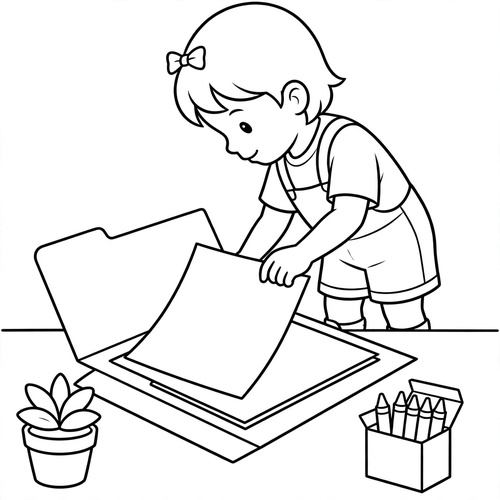
A child lifting a stored coloring page from a folder
5. Use coloring pages sources when a new resource is wanted at ColoringPagesCreative
ColoringPagesCreative offers homepage collections and discovery sections when a new resource or supported copy is wanted. Keep source context separate from the location of the physical sheet already in use. Before a new action, inspect the selected resource's offered format, paper guidance, and relevant terms.
A new browse is unnecessary when your aim is simply to retrieve the same available work and decide whether to continue it.
5.1 Use the observed homepage discovery routes
Retain enough source context for a later use check while treating physical location separately. Explore the observed routes when another resource is wanted, rather than making storage or retrieval trigger a new preparation step. This keeps a digital resource question separate from finding the page you already started.
5.2 Check the exact resource before a new use
Confirm the selected resource's information before printing another copy or considering a different use. Hold an unclear new action without preventing retrieval of the existing sheet. Keep that piece recognizable, supported, and accessible under the actual handling agreement.
Finding the intended work restores a choice. It does not require finishing the picture or following the old cue. A good temporary arrangement simply makes the physical page easy to recognize, retrieve, and reconsider later.
 Spanish
 English
 Arabic
 French
 Portuguese
 Deutsch
 Turkish
 Dutch
 Italiano
 Russian
 Romaian
 Portuguese (Brazil)
 Greek
