


How to Choose the Right Toolholder Taper for CNC Machining Applications
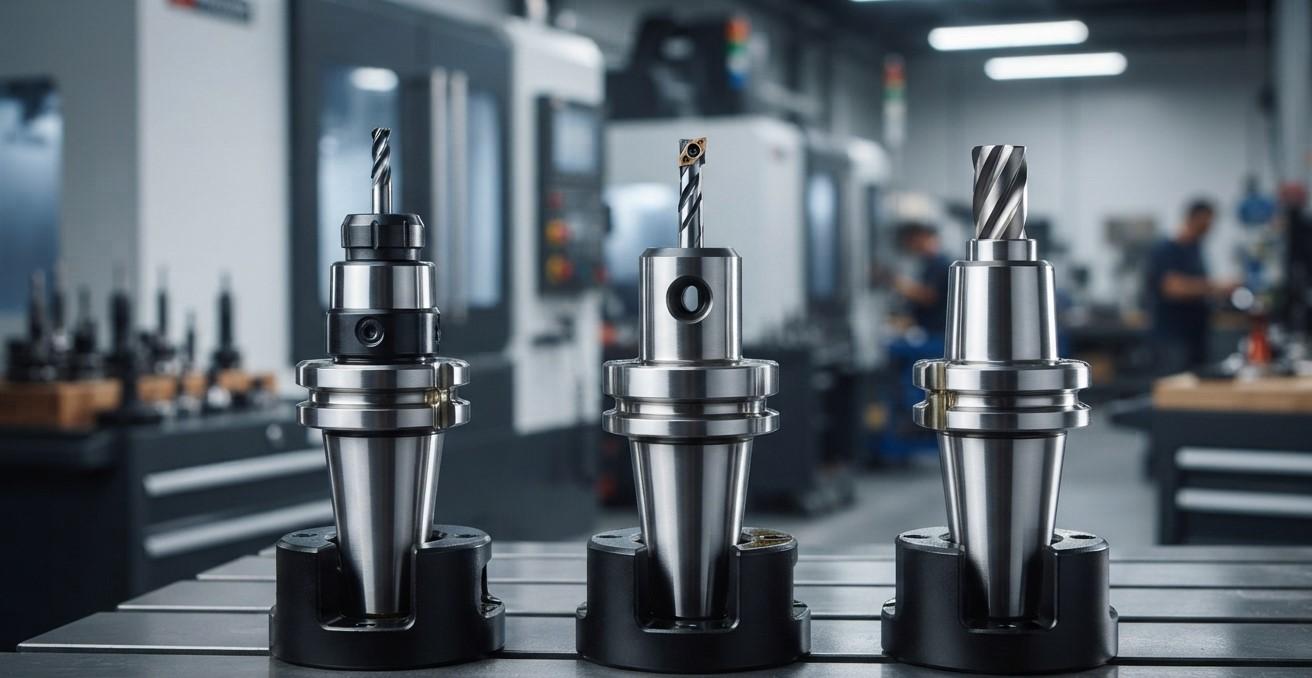
Choosing the correct toolholder taper is an important part of achieving accurate, stable, and efficient CNC machining. The toolholder creates the connection between the machine spindle and the cutting tool, so its taper must match the spindle interface precisely.
For workshops working with milling, drilling, boring, and other CNC operations, selecting the wrong taper can lead to poor tool seating, excessive runout, vibration, reduced tool life, and machining inaccuracies.
As an experienced Industrial Tools Supplier in Dubai, Khokhawala Trading LLC understands the importance of selecting industrial tooling according to the machine, application, and operating conditions. This guide explains the major CNC toolholder taper types and the key factors to consider before making a selection.
Table of Contents
-
What Is a Toolholder Taper?
-
Why Is the Correct Taper Important?
-
Common CNC Toolholder Taper Types
-
BT Toolholder Tapers
-
CAT Toolholder Tapers
-
HSK Toolholder Tapers
-
SK and ISO Toolholder Tapers
-
Factors to Consider When Choosing a Taper
-
Common Toolholder Selection Mistakes
-
How to Maintain Toolholder Tapers
-
Frequently Asked Questions
-
Conclusion and CTA
What Is a Toolholder Taper?
A toolholder taper is the specially shaped tapered section that connects a CNC toolholder to the machine spindle. It provides accurate positioning, stability, and torque transmission during machining.
The taper is only one part of the complete toolholding system. Depending on the machine, the assembly can also include a flange, pull stud or retention mechanism, collet, clamping nut, and cutting tool.
Different CNC machines use different spindle interfaces. Therefore, a holder that fits one machine may not be suitable for another, even if the taper size appears similar.
The most common CNC taper systems include BT, CAT, HSK, SK, and ISO.
Why Is the Correct Taper Important?
The toolholder is directly involved in maintaining the stability of the cutting tool. A properly matched taper can help provide:
-
Better spindle-to-holder connection
-
Improved machining accuracy
-
Reduced tool runout
-
Greater rigidity
-
Better surface finish
-
More consistent tool life
-
Improved vibration control
-
Reliable automatic tool changing
A poor match can have the opposite effect. An incorrectly specified holder may not seat correctly, may create excessive vibration, or may cause problems with the machine's automatic tool changer.
For this reason, the machine spindle specification should always be checked before purchasing replacement toolholders.
Common CNC Toolholder Taper Types
The main taper systems used in CNC machining include:
| Taper Type | General Characteristics | Common Applications |
|---|---|---|
| BT | 7:24 steep taper, widely used on Asian machines | General CNC machining |
| CAT | 7:24 steep taper with V-flange | Milling and heavy machining |
| HSK | Hollow taper with dual-contact design | High-speed and precision machining |
| SK | 7:24 steep taper used widely on European machines | General and precision machining |
| ISO | 7:24 taper used on various machines | Conventional and CNC machining |
The correct choice depends primarily on the spindle specification rather than simply choosing the most popular taper.
BT Toolholder Tapers
BT toolholders are widely used on CNC machining centers, particularly machines manufactured in Asia. Common sizes include BT30, BT40, and BT50.
BT holders use a 7:24 taper and are designed for secure spindle connection and automatic tool changing.
Advantages of BT Holders
BT holders are popular because they provide a practical combination of rigidity, availability, and versatility. They can be used for milling, drilling, boring, and other machining operations.
BT40 is commonly used for general-purpose machining, while larger sizes such as BT50 can be selected when greater rigidity and heavier cutting capability are required.
However, the exact holder specification must match the machine spindle, including flange and retention requirements.
CAT Toolholder Tapers
CAT toolholders are another widely used 7:24 taper system. Common sizes include CAT40 and CAT50.
CAT holders are frequently found on machining centers designed around the CAT standard. They are suitable for a broad range of milling and metalworking applications.
CAT40 vs CAT50
The choice between CAT40 and CAT50 depends on the machine and machining requirements.
CAT40 is commonly used for general machining applications where a balance between rigidity and flexibility is required.
CAT50 is larger and is generally selected for applications requiring greater rigidity and higher cutting forces.
It is important to remember that CAT and BT holders should not be considered interchangeable simply because they use a similar 7:24 taper. Flange geometry, retention components, and other interface details can differ.
HSK Toolholder Tapers
HSK stands for Hollow Shank Taper. Unlike conventional steep-taper systems, HSK holders use a hollow design and can provide contact between the taper and spindle face when used with the correct spindle system.
This dual-contact design makes HSK particularly useful for high-speed and high-precision machining.
HSK systems are available in different forms and sizes, including HSK-A and other specialized variants.
When Should You Choose HSK?
HSK can be a strong choice when your CNC machine requires:
-
High spindle speeds
-
High machining accuracy
-
Excellent repeatability
-
Reduced vibration
-
High-speed finishing
-
Precision mold machining
-
Advanced multi-axis machining
However, HSK requires a compatible spindle and clamping system. It should never be selected simply because it is considered a high-performance option.
SK and ISO Toolholder Tapers
SK toolholders are commonly associated with European CNC machining equipment and use a 7:24 steep taper design.
ISO toolholders are also based on standardized 7:24 taper configurations and can be found across a range of machining equipment.
These systems remain important because many industrial workshops operate machines from different manufacturers and generations.
When replacing an SK or ISO holder, it is important to confirm the complete spindle interface rather than relying only on the taper number.
Factors to Consider When Choosing a Toolholder Taper
Choosing the right taper requires more than checking the holder size. Consider the following factors.
1. Check the Machine Spindle
The machine spindle specification should always be the starting point.
Check the:
-
Taper type
-
Taper size
-
Spindle model
-
Retention system
-
Flange configuration
-
Automatic tool changer requirements
If the original holder is available, its markings can also help identify the correct replacement.
2. Consider Spindle Speed
Spindle speed is another important factor.
Standard machining applications may work effectively with conventional steep-taper holders, while high-speed machining may require a toolholding system designed specifically for higher rotational speeds.
The holder should always have an appropriate manufacturer-rated operating speed for the complete assembly.
3. Consider Cutting Forces
Heavy-duty machining generates greater cutting forces. When performing aggressive roughing or machining harder materials, rigidity becomes especially important.
A larger and appropriately specified toolholder system may provide greater stability for demanding operations.
4. Consider Machining Accuracy
Precision applications require careful control of runout, balance, and tool positioning.
If the machining process involves tight dimensional tolerances or fine surface finishes, the complete toolholding assembly should be selected with accuracy and repeatability in mind.
5. Consider the Cutting Tool
The taper is only one part of the system. You also need to consider how the cutting tool will be held.
Possible clamping methods include:
-
ER collets
-
Hydraulic chucks
-
Shrink-fit holders
-
Milling chucks
-
Weldon-style holders
-
Specialized toolholding systems
The best combination depends on the cutting tool, machining operation, required accuracy, and spindle speed.
6. Consider Tool Length
Long tool assemblies can increase deflection and vibration.
For deep cavities or difficult-to-reach areas, an extension may be necessary, but unnecessary tool length should generally be avoided when rigidity is important.
A shorter, properly supported tool assembly can provide better stability.
7. Consider the Machine's Automatic Tool Changer
CNC machines with automatic tool changers require holders that meet the machine's specific dimensions and retention requirements.
A holder may appear to fit the spindle but still cause problems if the flange, pull stud, or tool changer interface is incorrect.
Always confirm compatibility before purchasing.
Common Toolholder Selection Mistakes
Several mistakes can reduce machining performance.
Choosing Only by Taper Number
A taper number alone does not provide enough information. For example, two holders may have similar taper designations but different flange or retention specifications.
Assuming BT and CAT Are Interchangeable
BT and CAT systems may share a similar steep-taper concept, but their complete interfaces are different. Always verify the exact machine specification.
Ignoring Spindle Speed
A toolholder suitable for conventional machining may not be suitable for high-speed applications.
Operating a holder beyond its rated conditions can create serious performance and safety problems.
Using Damaged or Dirty Tapers
Even the correct holder can perform poorly if its taper is contaminated, scratched, or damaged.
Cleanliness and inspection are essential for reliable toolholding.
Selecting the Holder Without Considering the Cutting Operation
Heavy roughing, high-speed finishing, drilling, and precision contouring can place very different demands on a toolholder.
The holder should be selected as part of the complete machining setup.
How to Maintain Toolholder Tapers
Proper maintenance helps preserve accuracy and extend toolholder service life.
Keep Tapers Clean
Remove chips, coolant residue, dust, and other contamination before installing the holder.
Inspect for Damage
Check the taper surface regularly for scratches, dents, corrosion, or abnormal wear.
Check Runout
Excessive runout can affect cutting accuracy, surface finish, and tool life. Regular inspection helps identify problems before they affect production.
Handle Holders Carefully
Avoid dropping toolholders or allowing their precision surfaces to contact hard surfaces unnecessarily.
Store Toolholders Properly
Use organized storage that protects taper surfaces from impact, moisture, and contamination.
How to Choose the Right Toolholder Taper: A Simple Checklist
Before purchasing a CNC toolholder, confirm:
-
What taper does the machine spindle use?
-
What is the correct taper size?
-
What retention system does the machine require?
-
What spindle speed will be used?
-
What type of machining operation will be performed?
-
How much rigidity is required?
-
What level of runout is acceptable?
-
What cutting tool and clamping method will be used?
-
Is the holder compatible with the automatic tool changer?
-
Is the complete assembly suitable for the intended machining conditions?
Answering these questions can significantly reduce the risk of selecting an incompatible toolholder.
Frequently Asked Questions
1. What is the purpose of a CNC toolholder taper?
The taper connects the toolholder securely to the CNC spindle while providing accurate positioning, rigidity, and torque transmission.
2. What are the most common CNC toolholder tapers?
BT, CAT, HSK, SK, and ISO are among the common taper systems used in CNC machining.
3. Are BT and CAT toolholders interchangeable?
No. Although BT and CAT systems use similar 7:24 taper concepts, their complete spindle interfaces can differ. The machine specification should always be checked.
4. Which toolholder taper is best for high-speed machining?
HSK systems are commonly used for high-speed machining because their design can provide strong rigidity, repeatability, and dynamic performance when matched with the correct spindle.
5. How do I know which toolholder taper my CNC machine needs?
Check the machine manual, spindle specifications, existing toolholder markings, or information provided by the machine manufacturer. When uncertain, confirm the complete spindle interface before ordering.
6. Does toolholder taper affect machining accuracy?
Yes. The taper and complete toolholding assembly can influence rigidity, runout, vibration, repeatability, and overall machining accuracy.
7. Why is toolholder maintenance important?
Clean and undamaged toolholders help maintain proper spindle contact and reduce problems caused by contamination, wear, or surface damage.
Conclusion
Choosing the right toolholder taper is essential for reliable CNC machining performance. The correct taper should match the machine spindle, retention system, tool changer, spindle speed, cutting forces, and machining requirements.
BT, CAT, HSK, SK, and ISO systems each have their own applications and characteristics. Rather than selecting a holder based only on price or popularity, workshops should consider the complete machining setup.
For businesses looking for dependable industrial tooling solutions, Khokhawala Trading LLC provides professional support as an Industrial Tools Supplier in Dubai, helping customers identify suitable tooling solutions for different industrial and machining requirements.
CTA
Need the right toolholder for your CNC machining application?
Contact Khokhawala Trading LLC, your trusted Industrial Tools Supplier in Dubai, for assistance in selecting suitable industrial tooling based on your machine, application, and machining requirements. Choosing the right toolholding solution can help improve machining stability, accuracy, productivity, and tool performance.
 Greek
Greek
 English
 Arabic
 French
 Spanish
 Portuguese
 Deutsch
 Turkish
 Dutch
Dutch
 Italiano
 Russian
 Romaian
 Portuguese (Brazil)
