


Ceiling Fan Market Future Driven by Hybrid Cooling Systems, Energy Storage Integration, and Next-Generation Innovations
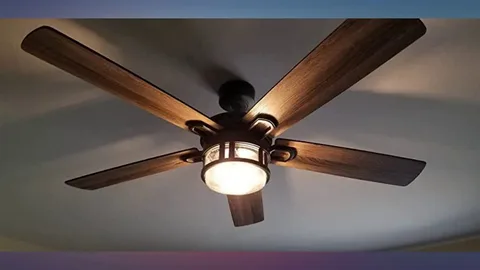
As per Market Research Future analysis, the Ceiling Fan Market Size was estimated at 12.4 USD Billion in 2024. The Ceiling Fan industry is projected to grow from 12.98 USD Billion in 2025 to 20.56 USD Billion by 2035, exhibiting a compound annual growth rate (CAGR) of 4.7% during the forecast period 2025 - 2035.
The ceiling fan market is poised for a transformative future as next-generation innovations such as hybrid cooling systems, energy storage integration, and advanced materials redefine the role of fans in modern environments. While traditionally seen as standalone cooling devices, ceiling fans are increasingly being integrated into broader climate control ecosystems that combine multiple technologies to deliver enhanced efficiency, flexibility, and sustainability. This evolution is positioning ceiling fans as a critical component of future-ready cooling solutions across residential, commercial, and industrial applications.
One of the key drivers is the growing demand for hybrid cooling systems that combine ceiling fans with air conditioning, ventilation, and renewable energy solutions. These systems work synergistically to optimize airflow and temperature regulation, reducing the overall energy load on air conditioning units. By improving air circulation, ceiling fans enable higher thermostat settings for AC systems, leading to significant energy savings and improved efficiency.
Another important factor contributing to market growth is the integration of energy storage technologies, such as battery systems and solar power solutions. Ceiling fans powered by renewable energy sources are gaining traction, particularly in regions with unreliable electricity supply or high energy costs. These systems ensure uninterrupted operation and contribute to energy independence, making them highly attractive for both urban and rural consumers.
The role of advanced materials and aerodynamic design is also becoming increasingly significant in enhancing performance. Innovations in blade design, lightweight composites, and high-efficiency motors are enabling ceiling fans to deliver superior airflow with minimal energy consumption. These advancements are improving durability, reducing noise levels, and enhancing overall user experience.
Another key trend is the increasing demand for future-ready cooling solutions that align with smart homes, green buildings, and sustainable infrastructure. Consumers and businesses are seeking products that not only meet current needs but also adapt to evolving technological and environmental requirements.
Manufacturers are investing heavily in research and development to create innovative products that integrate seamlessly with smart ecosystems. Features such as AI-driven controls, IoT connectivity, and energy monitoring are becoming standard in next-generation ceiling fans, enabling users to optimize performance and reduce energy consumption.
The expansion of smart grid infrastructure is further supporting the integration of ceiling fans into energy management systems. These systems enable real-time monitoring and optimization of energy usage, contributing to overall efficiency and sustainability.
Additionally, the concept of decentralized energy systems is gaining traction, where ceiling fans powered by renewable sources operate independently of traditional power grids. This approach is particularly beneficial in remote areas and regions with limited infrastructure, creating new opportunities for market growth.
However, challenges such as high initial investment costs, technological complexity, and limited consumer awareness may impact adoption. The need for skilled installation and maintenance can also pose barriers in certain markets.
Despite these challenges, the long-term outlook remains highly promising due to rapid technological advancements, increasing focus on sustainability, and growing demand for efficient cooling solutions. The convergence of hybrid systems, renewable energy, and smart technologies is expected to redefine the ceiling fan market.
In conclusion, the ceiling fan market is being driven by hybrid cooling innovations, energy storage integration, and next-generation technologies that are shaping the future of sustainable and intelligent cooling systems.
FAQs
1. What are hybrid cooling systems?
Systems that combine fans with AC and ventilation for better efficiency.
2. How does energy storage help ceiling fans?
It enables uninterrupted operation using renewable energy.
3. What drives future market growth?
Smart technology, sustainability, and advanced materials.

 English
 Arabic
 Spanish
 Portuguese
 Deutsch
 Turkish
 Dutch
 Italiano
 Russian
 Romaian
 Portuguese (Brazil)
 Greek
