


Understanding Embedded Software in Everyday Technology
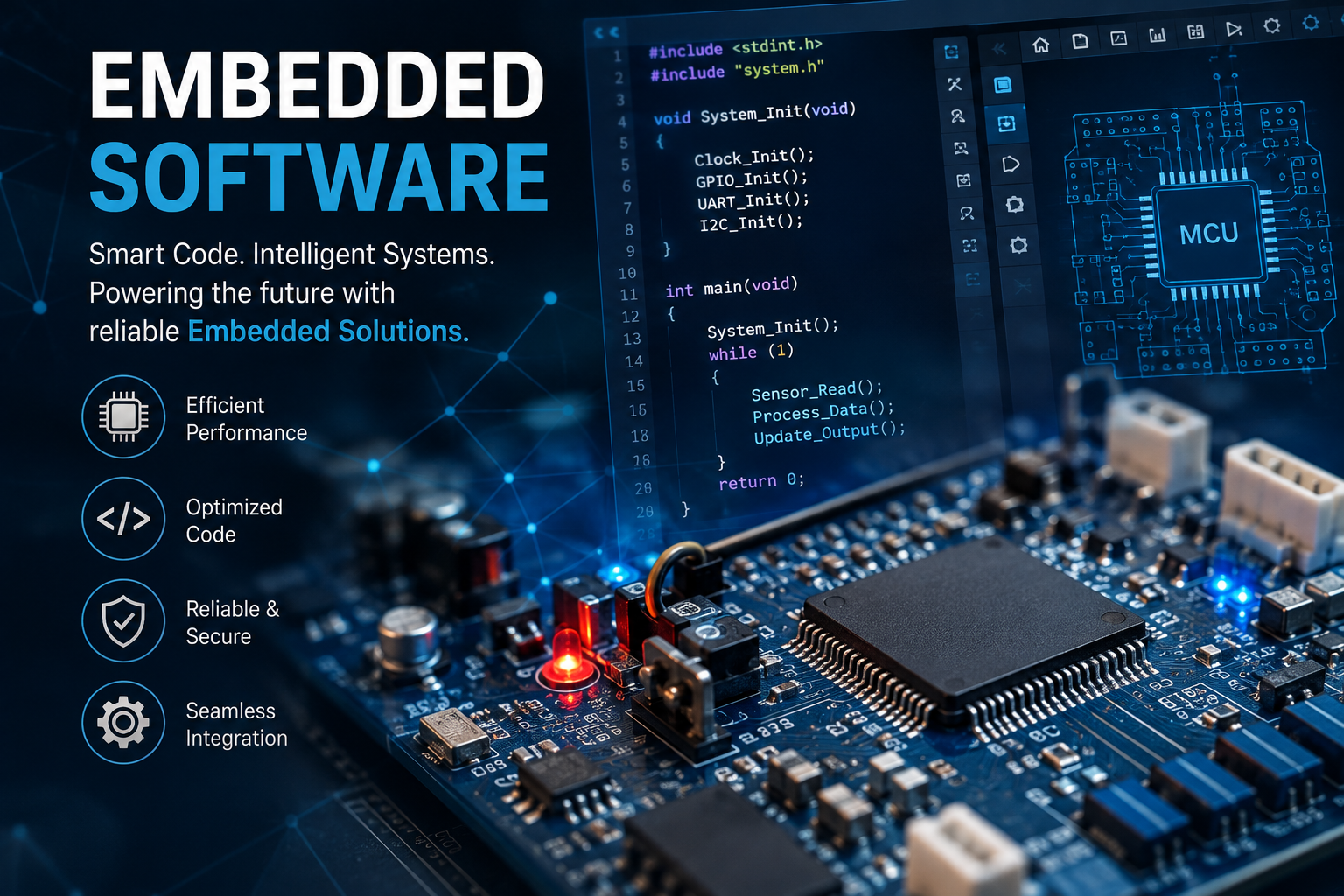
Many devices that people use every day contain small computers designed to perform specific functions. These systems depend on embedded software to control hardware and provide the features users expect.
Unlike software created for general-purpose computers, embedded software is developed for a particular device or application. It may control a washing machine, vehicle system, industrial controller, smart appliance, or electronic instrument.
Embedded software interacts closely with hardware. It may receive information from sensors, process that information, and send commands to other components. Because of this close relationship, developers need to understand both software behavior and hardware limitations.
Performance is another important consideration. Many embedded devices have limited memory and processing resources. Developers must therefore create efficient software that performs its required tasks without consuming unnecessary system resources.
Testing is an essential part of development. Developers may test individual functions, communication between components, system behavior, and responses to unusual conditions. Hardware-in-the-loop and other testing approaches can help identify issues before deployment.
As products become more connected and intelligent, embedded software is becoming increasingly important. It provides the underlying control that allows physical devices to respond to inputs, communicate with other systems, and perform specialized functions.

 Arabic
 French
 Spanish
 Portuguese
 Deutsch
 Turkish
 Dutch
Dutch
 Italiano
 Russian
 Romaian
 Portuguese (Brazil)
 Greek
Greek
