


Resistance Welder: A Comprehensive Guide for Industrial Manufacturing
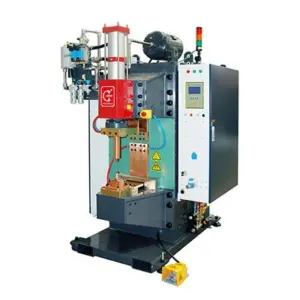
In today’s fast-paced manufacturing environment, efficiency, precision, and reliability are non-negotiable. Among the critical tools enabling high-quality metal joining, the resistance welder stands out as a versatile and robust solution. From automotive assembly lines to large-scale industrial fabrication, resistance welding has become a cornerstone of modern production. In this guide, we will explain how resistance welders work, their key applications, advantages, and why partnering with an experienced manufacturer like Heron Welder ensures optimal results for your operations.
What Is a Resistance Welder?
A resistance welder is a type of welding equipment that joins metal components by applying electric current and pressure through electrodes at the point of contact. The electrical resistance at the interface generates heat, melting the metals and forming a strong bond as the joint cools under pressure.
Resistance welding is widely favored for its speed, repeatability, and clean joints, making it ideal for industries requiring high-volume production and consistent quality.
How Resistance Welding Works: The Principles
The operation of a resistance welder is based on Joule’s Law, where heat generated (H) is proportional to the square of the current (I²), the electrical resistance (R) of the material, and the welding time (t):
H = I² × R × t
Key components of a resistance welding system include:
-
Electrodes: Conduct electricity and apply mechanical force to the workpieces.
-
Transformer/Power Source: Supplies the required welding current. Modern machines often use MFDC (Medium-Frequency Direct Current) for precise control.
-
Control System: Regulates current, pressure, and timing for consistent welds.
By carefully balancing these parameters, resistance welders produce strong, repeatable welds with minimal material distortion.
Types of Resistance Welders
Heron Welder offers a comprehensive range of resistance welding solutions tailored to different industrial needs:
Spot Welding
Ideal for joining sheet metal at specific points, spot welding is widely used in automotive panels, appliance manufacturing, and HVAC components.
Seam Welding
This type uses rotating wheel electrodes to create continuous welds, perfect for tanks, drums, and pipelines requiring leak-proof seams.
Projection Welding
Projection welding concentrates current at pre-formed projections on one of the components, enabling the joining of complex assemblies with multiple welds simultaneously.
Capacitor Discharge Welding
Designed for high-speed, low-heat welding, capacitor discharge welders are ideal for electrical connectors, terminals, and small components where precision is critical.
MFDC Welding
MFDC resistance welders provide consistent medium-frequency DC current, offering superior control over heat input, reduced spatter, and enhanced energy efficiency perfect for automated production lines.
Applications Across Industries
Resistance welding is a versatile solution for numerous sectors:
-
Automotive Manufacturing: Body panels, battery packs, exhaust systems.
-
Electronics & Electrical: Terminals, connectors, and motor laminations.
-
Appliances & HVAC: Sheet metal fabrication, housings, and duct assemblies.
-
Metal Furniture & Fixtures: Steel frames, storage racks, and custom assemblies.
Heron Welder’s systems are engineered to integrate seamlessly with automated production lines, ensuring high throughput without compromising joint quality.
Why Choose Resistance Welding Over Other Methods?
Resistance welding offers several advantages over traditional welding techniques:
-
High Speed: Rapid cycles ideal for mass production.
-
Minimal Material Distortion: Localized heat reduces warping.
-
Clean and Safe: No filler material or fumes for most applications.
-
Energy Efficiency: Only heats the contact area, reducing power consumption.
For manufacturers seeking reliability, Heron Welder delivers solutions optimized for both manual and automated operations, ensuring each weld meets stringent quality standards.
Best Practices for Resistance Welding
To maximize efficiency and weld quality:
-
Select Proper Electrode Material: Copper alloys are preferred for conductivity and durability.
-
Monitor Current and Pressure: Ensure consistency across production cycles.
-
Regular Maintenance: Replace worn electrodes and inspect connections to avoid defects.
-
Integrate Automation: Use programmable controllers for repeatable welds and real-time monitoring.
Heron Welder supports clients with customized solutions, training, and service programs, helping manufacturers achieve superior production results.
Heron Welder: Your Industrial Welding Partner
With decades of expertise in industrial resistance welding, clinching, and self-pierce riveting, Heron Welder is a trusted partner for OEMs, automation integrators, and production engineers worldwide.
Our solutions combine robust engineering, precision control, and automation-ready designs to meet the most demanding manufacturing requirements. From high-speed spot welders to fully integrated automated lines, we provide customized systems tailored to your production goals.
FAQs About Resistance Welders
Q1: Can resistance welders join dissimilar metals?
A1: Yes, certain alloys like steel-to-stainless or copper-to-brass can be welded using specialized electrodes and precise parameter control.
Q2: How do I choose between spot and seam welding?
A2: Spot welding is ideal for point-to-point joins, while seam welding is used for continuous, leak-proof applications like tanks and containers.
Q3: Are resistance welders safe for high-volume production?
A3: Absolutely. When maintained and operated correctly, resistance welders are highly safe, with localized heat minimizing operator exposure.
Q4: Can resistance welding be automated?
A4: Yes, most modern systems, including Heron’s MFDC and capacitor discharge welders, are fully compatible with robotic and conveyor-based automation.
Q5: What maintenance is required for resistance welders?
A5: Regular inspection of electrodes, cleaning, and calibration of controls ensure consistent weld quality and long equipment life.
Conclusion
Resistance welding is a powerful, efficient, and precise metal-joining solution for modern manufacturing. Selecting the right equipment, maintaining best practices, and leveraging expert guidance are key to maximizing production efficiency.
At Heron Welder, we offer custom-designed resistance welding systems and automation solutions that enhance quality, speed, and operational efficiency.
Contact us today to request a quote or consult with our engineers for a customized welding solution tailored to your production needs.
 Spanish
 English
 Arabic
 French
 Portuguese
 Deutsch
 Turkish
 Dutch
Dutch
 Italiano
 Russian
 Romaian
 Portuguese (Brazil)
 Greek
Greek
